MOTORMIA: Tune & Mod Your Ride
- 4.6
- Rating
- 50.00K
- Installs
- Free
- Price

 Analysis by App-foxy
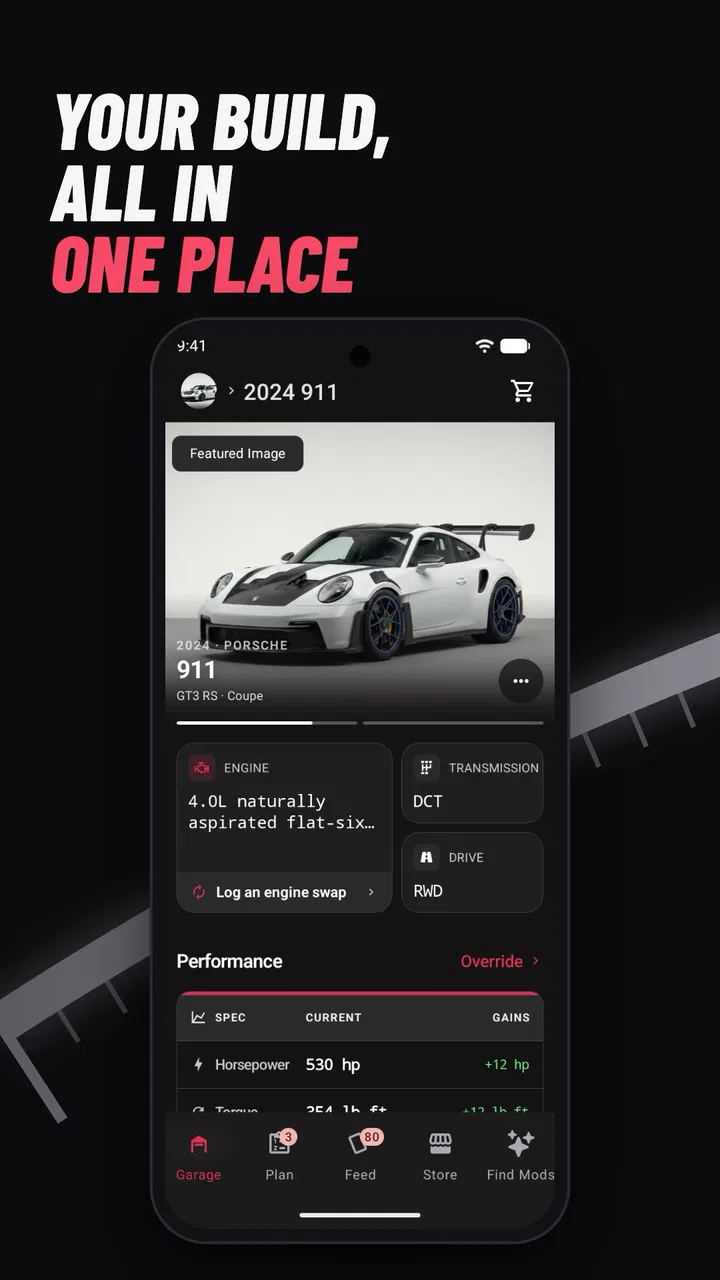
I approached MOTORMIA: Tune & Mod Your Ride as a practical companion for planning car changes, not as a replacement for a mechanic, parts catalog, or dyno session. Its focus is easy to understand: use AI to help narrow down modification ideas, parts, and performance upgrades instead of searching through disconnected forums and product pages. That makes it appealing to anyone who has a car in mind but is unsure where to begin.
What I like most is the app’s starting point. Many car-modification tools assume that I already know the exact component, brand, or specification I want. MOTORMIA takes the opposite route by putting personalization at the center. I can think in terms of the result I want—better appearance, a more purposeful setup, or stronger performance—and use that as the basis for exploring possibilities. That is a much friendlier approach for a newcomer.
At the same time, I would not treat an AI recommendation as an installation order. Vehicle compatibility, local regulations, insurance requirements, tire clearance, suspension geometry, and the condition of the car still need human verification. The app is most useful as a decision-making and discovery tool: it can help me form a sensible shortlist before I spend money or speak with a specialist.
You May Also Like

 Google Keep - Notes and lists
Google Keep’s Quiet Growth Shows the Appeal of Simpler Notes
As mobile work gets busier, Google Keep keeps winning a simple contest: capture a thought quickly, find it later, and get on with the day.

 Blood Strike: 2.5 Anniversary
Blood Strike’s Loadouts Turn Every Drop Into a Tactical Gamble
A close look at Blood Strike’s custom loadouts: how fast access to signature weapons reshapes its battle royale rhythm, rewards preparation, and narrows the gap between fights.

 Pandora - Music & Podcasts
Pandora’s Music Is Easy to Start, but Harder to Recover
Pandora’s strength is its low-effort path from a seed to a station. Its weak spot is how much confidence it asks you to place in connection, setup, and quiet recovery.

 8 Ball Pool
 Is Built on Rivalries, Rematches, and Routine
A close look at the rivalries, rematches, shared routines, and unanswered safety questions that turn a quick pool match into a persistent mobile community.

 Samsung Music
’s Quiet Strength Is Playing What You Already Own
Its reach comes less from spectacle than from dependable access to a personal library. That simplicity is both the app’s strongest retention engine and its ceiling.

 AccuWeather: Weather Radar
AccuWeather Review: A Quick, Clear Forecast for Everyday Decisions
For everyday plans, the best forecast is the one you can understand quickly. AccuWeather makes rain timing, radar, and local conditions easy to act on, with a few trade-offs.
More From Our News Desk



How MOTORMIA fits into a real modification project
I use MOTORMIA most effectively when I treat a modification idea as a project with stages, rather than asking for a quick list of parts. For a shared car, I would first agree on the everyday needs everyone wants to preserve—comfort, dependable commuting, or room for regular trips—then explore changes that fit those priorities. That keeps the conversation grounded and makes it easier to decide what needs checking before any purchase.
A more approachable starting point than traditional research
Car modification research can become messy very quickly. A search for one upgrade often leads to unrelated builds, old forum posts, conflicting opinions, and parts intended for different versions of the same model. I found the AI angle valuable because it encourages a more conversational way to describe what I am trying to achieve. Instead of beginning with technical language, I can begin with a goal and then use the suggestions to learn which categories of parts deserve attention.
This is especially helpful when a project has a limited budget or a clear priority. Someone who wants a sharper-looking daily driver should not automatically begin with expensive engine work. Someone who drives on poor roads may need to think carefully before choosing an aggressive suspension setup. The useful question is not simply “what can I install?” but “what change makes sense for the way I use this car?” MOTORMIA’s personalized approach is well suited to that first conversation.
I also see value in using it before visiting a parts shop. A short session can help turn a vague idea into a checklist: appearance changes, handling-related components, intake or exhaust considerations, and practical items such as tires or braking hardware. I still want a human to confirm the final choices, but arriving with a clearer vocabulary makes that conversation faster and less intimidating.
One everyday scenario where it earns its place
Imagine I own a car that I drive to work every day and occasionally take on a weekend trip. I want it to feel more engaging, but I do not want a harsh ride, excessive noise, or a modification that creates constant maintenance. With a conventional search, I might collect a long list of popular upgrades without understanding the compromises. With MOTORMIA, I can frame the request around daily usability and ask for a staged direction rather than chasing maximum performance.
The important part of that workflow is the word “staged.” I would begin with changes that affect the car’s contact with the road and its overall feel, then consider more involved performance work only after understanding the consequences. This is one of the less obvious ways to use an AI modification app: not as a shopping shortcut, but as a way to sequence decisions. A good sequence can prevent me from buying visually impressive parts that undermine comfort or from adding power before the car can use it safely.
For an enthusiast who already knows every compatible part for a particular platform, the benefit is smaller. That person may get more value from a specialist forum, a manufacturer’s fitment guide, or a trusted local workshop. MOTORMIA is strongest in the space between curiosity and informed planning.
What the current release tells me
MOTORMIA is a free Auto & Vehicles app from MOTORMIA, and the current version is 3.1.0. It is available for devices running Android 7.0 or later, which keeps the technical entry barrier fairly low for Android users with older phones. The app is rated for Everyone, so its presentation is intended to be broadly accessible rather than aimed only at experienced builders.
The app was released on November 1, 2024, and its current adoption gives me some useful context without turning popularity into proof of quality. It has passed 50 thousand installs, with an average rating of 4.6 from 486 ratings and 114 reviews. I read that as a promising sign of interest, but not as a reason to skip my own checks. Modification advice needs to be judged by fitment and real-world consequences, not only by an app-store score.
The fact that it is free also changes how I would use it. I can explore ideas before committing money, compare several directions, and discard unrealistic plans early. That is valuable in a category where a single wrong purchase can cost much more than the app itself. Free access makes experimentation easier, although it also means I should remain alert to whether a recommendation is genuinely relevant or simply attractive in theory.
How the AI approach changes the research process
The most useful mental model is to treat the app as a filter. I would give it enough context to avoid generic advice: the vehicle, how it is driven, the desired result, tolerance for comfort changes, and the amount of work I am prepared to take on. The more clearly I define those boundaries, the more useful the resulting direction should be. A request such as “make my car faster” is too broad; a request centered on responsive handling for regular road use is more actionable.
There is also a practical advantage in asking the same project question from different angles. I might first ask what supports a balanced street setup, then ask which suggestions could create drawbacks for commuting, and finally ask what should be checked before purchase. This does not make the AI infallible, but it encourages me to examine trade-offs rather than accepting the first appealing idea.
That workflow is more advanced than simply requesting a list of parts. It turns the app into a planning notebook. I can use it to identify questions for a mechanic, compare priorities, and notice when an upgrade depends on another part. In my view, this is where the app can save time even when I ultimately buy elsewhere.
Where I would verify every recommendation
I would never rely on a recommendation alone for exact compatibility. A car can have multiple engines, body styles, drivetrains, brake packages, suspension revisions, and regional specifications. Two vehicles that look identical may require different parts. Before purchasing, I would check the part number, the manufacturer’s fitment information, installation requirements, and whether the modification affects other systems.
Performance suggestions need an additional layer of caution. A promise of more power can bring heat, fuel, drivetrain, braking, or reliability considerations. Cosmetic parts can create their own problems if they affect visibility, lighting, ground clearance, or access to safety equipment. MOTORMIA can help me discover the relevant categories, but it cannot inspect the actual vehicle or take responsibility for the finished build.
I would also verify legal requirements locally. Exhaust noise, lighting, window tint, emissions equipment, ride height, and wheel or tire changes can all be treated differently depending on where the car is registered. A recommendation that makes sense for a show-oriented build may not be appropriate for a road-legal daily driver. This is a key boundary: the app can support research, while compliance remains my responsibility.
What existing users may notice in version 3.1.0
For someone already using MOTORMIA, version 3.1.0 is the release I would evaluate as the current baseline. I would pay attention to whether conversations feel consistent, whether the app understands a vehicle description without repeated correction, and whether its suggestions stay tied to the stated goal. Those are the details that determine whether an AI tool feels genuinely helpful or merely produces polished generalities.
I would also test it with the same project over several sessions. For example, I might describe a comfort-focused setup, close the app, and return later to ask about costs, installation complexity, or likely compromises. A useful experience should help maintain the logic of the project rather than sending me back to unrelated ideas each time. This kind of repeat test tells me more than a single impressive answer.
Existing users should still approach updates with a practical mindset. A newer version can improve the experience, but it does not remove the need to verify recommendations. The best way to judge the current release is to use it on a real but low-risk planning task, then compare its suggestions with a reputable parts source or a knowledgeable technician.
Three habits that make the app more useful
- State the use case before the upgrade. Mention commuting, long trips, occasional track use, winter driving, or show use. The same part can be sensible in one context and frustrating in another.
- Ask for dependencies, not only ideas. If a modification affects tires, brakes, alignment, cooling, or supporting hardware, ask what must be checked before installation. This exposes hidden work early.
- Request a conservative alternative. An aggressive setup is not automatically the best setup. Asking for a lower-risk or more comfortable route reveals the trade-off between appearance, performance, cost, and daily practicality.
I would add one more habit: separate inspiration from purchasing. First use the app to define the direction, then verify exact fitment and prices elsewhere. This prevents the common mistake of treating a broad AI suggestion as if it were a complete shopping list. It also gives me room to compare brands, warranties, installation quality, and local availability.
Where the experience still has limits
The biggest limitation is inherent to the format. AI can organize information and suggest paths, but it does not physically examine a worn bushing, measure ride height, hear an exhaust in person, or know whether a previous owner has modified the car already. If the vehicle has unknown maintenance history, I would prioritize inspection and basic mechanical health before using the app to plan performance changes.
There is also a risk of false confidence. A neatly written recommendation can sound more certain than it deserves. I would be cautious whenever the suggestion involves safety-critical systems, structural changes, engine calibration, or a modification that depends on exact vehicle specifications. In those cases, the app should help me prepare questions, not make the final call.
Another possible friction point is that personalization depends on the quality of my input. If I leave out the drivetrain, intended use, budget, or comfort preference, the result may be too broad to act on. That is not a defect unique to this app, but it matters here because the central promise is tailored guidance. The app rewards users who describe the project carefully.
People looking for a complete marketplace, direct installation booking, or a definitive compatibility database should probably choose a more specialized service. MOTORMIA is not the option I would pick when I already have a precise part number and need an immediate fitment confirmation. I would use a manufacturer or retailer source for that final step.
Who should try it and who should skip it
I would recommend MOTORMIA to a first-time modifier, a driver with a half-formed project, or an enthusiast comparing several directions before spending money. It is particularly useful when the challenge is not a lack of enthusiasm but a lack of structure. The app can help organize priorities and expose questions that I might otherwise discover only after buying the wrong component.
It also suits owners who want to balance style and function. Instead of chasing the most dramatic build, I can use the conversation to think about how a modification affects comfort, reliability, practicality, and the car’s existing character. That balance is often more valuable than a long list of fashionable parts.
I would skip it as my main solution if I am already deeply familiar with my vehicle platform, need legally authoritative advice, or want a guaranteed parts fitment result. I would also avoid using it as the sole guide for high-risk mechanical work. In those situations, specialist documentation and professional inspection are better tools.
What I would watch as the product develops
As the app evolves, I would watch for deeper project continuity. The most valuable improvement would be the ability to keep a modification plan coherent across stages: initial goal, supporting work, verification points, and final checks. That would make it more useful than a simple idea generator.
I would also look for clearer handling of uncertainty. When a recommendation depends on the exact engine, trim, market, or existing hardware, the app should make that dependency obvious and encourage verification. Good AI assistance is not only about producing answers; it is about showing when an answer needs a human or a reliable technical source.
Finally, I would judge future releases by whether they become more practical without becoming more overwhelming. A beginner needs understandable guidance, while an experienced owner needs enough detail to spot assumptions. If MOTORMIA can serve both audiences by explaining trade-offs clearly, it will have a stronger long-term role in the car-modification process.
My final take on the free planning companion
MOTORMIA: Tune & Mod Your Ride is a useful starting point for turning car-modification curiosity into a more organized plan. I like its emphasis on personalized goals, especially for drivers who are not yet fluent in parts terminology. The free price makes it easy to test, and the current 3.1.0 release gives Android users on version 7.0 or later a straightforward way to explore the concept.
My recommendation comes with a clear condition: use it to think better, not to skip verification. Its strongest contribution is helping me compare directions, identify dependencies, and prepare for a more informed conversation with a parts specialist or mechanic. Its weakest point is the unavoidable distance between an AI suggestion and the physical reality of a specific car.
If I were helping a friend plan a first tasteful build, I would suggest trying it before buying anything. I would ask focused questions, request conservative alternatives, check every compatibility detail, and keep safety and local rules ahead of appearance or power. Used that way, MOTORMIA is a practical research companion rather than a magic tuning button—and that is a realistic role it can perform well.
FAQs for MOTORMIA: Tune & Mod Your Ride
01What platforms is MOTORMIA: Tune & Mod Your Ride available on?
MOTORMIA: Tune & Mod Your Ride is available on both Android and iOS platforms. Users can download it from the Google Play Store for Android devices and the Apple App Store for iOS devices. Ensure your device meets the minimum operating system requirements for optimal performance.
02What are the main features of MOTORMIA?
MOTORMIA offers a comprehensive car tuning and modification experience. Key features include a wide range of customization options for various car models, a dynamic garage to showcase your creations, realistic driving physics, and an engaging community for sharing and competing with other players. Regular updates introduce new content and features.
03Is MOTORMIA free to play, or are there in-app purchases?
MOTORMIA is free to download and play; however, it offers in-app purchases. These purchases can enhance the gaming experience by unlocking premium content, exclusive car parts, and customization options. While the game is enjoyable without purchases, some players might prefer these enhancements for a more personalized experience.
04How does the multiplayer mode work in MOTORMIA?
In MOTORMIA's multiplayer mode, players can compete with others worldwide in real-time races and show off their customized cars. The game features leaderboards where players can track their rankings. Engaging in multiplayer races can earn rewards that help in further customization and tuning of your ride.
05What should I do if the app crashes or encounters bugs?
If MOTORMIA crashes or you encounter any bugs, try restarting the app or your device first. Ensure your app is updated to the latest version. If issues persist, contact the support team through the app or their official website. Providing details about your device and the issue will help resolve problems more efficiently.
Pros
- Extensive customization options.
- Intuitive user interface.
- Realistic car physics.
- Regular updates with new content.
- Engaging community features.
Cons
- In-app purchases can be pricey.
- Occasional lag on older devices.
- Limited offline functionality.
- Some features feel repetitive.
- Requires a stable internet connection.

MOTORMIA: Tune & Mod Your Ride
Gallery